
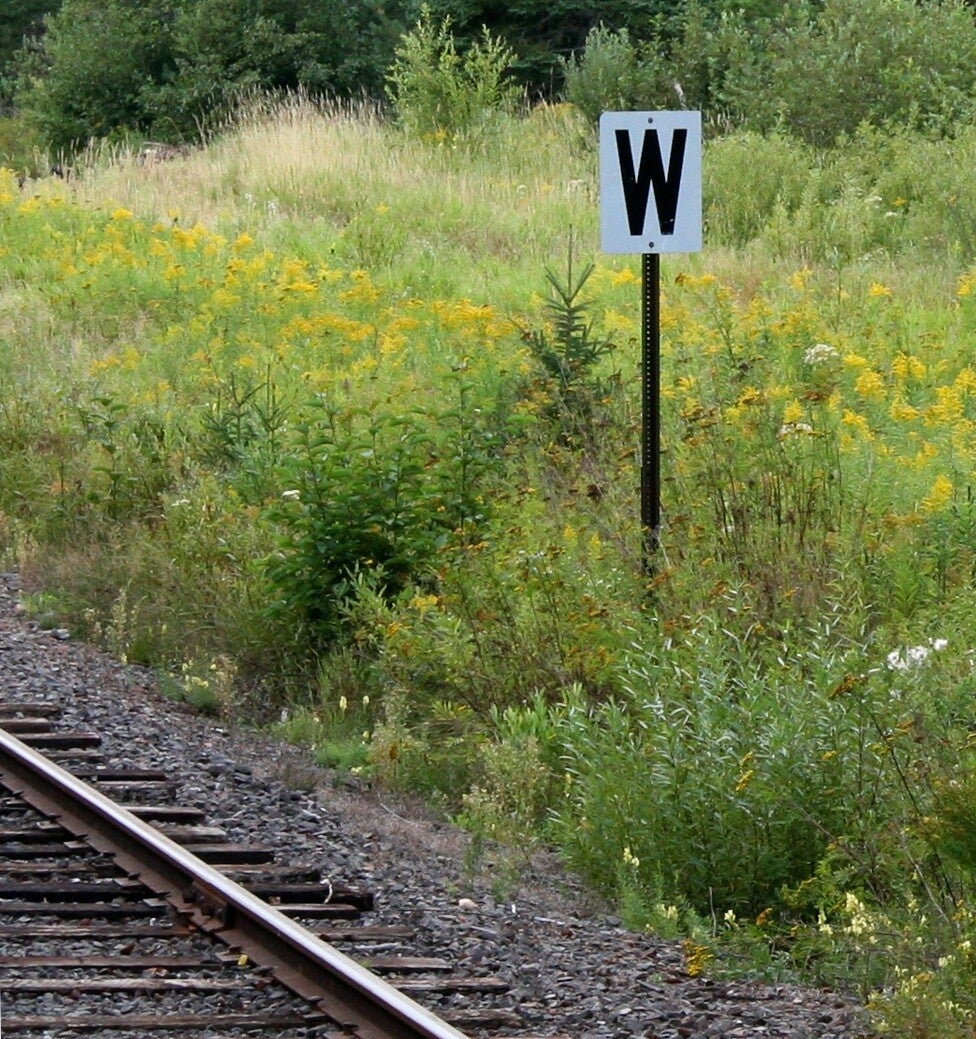
Whistle post on the North Shore Scenic Railroad in Minnesota.
(Jonathunder, CC BY-SA 3.0 <https://creativecommons.org/licenses/by-sa/3.0>, via Wikimedia Commons)

WHISTLE POST
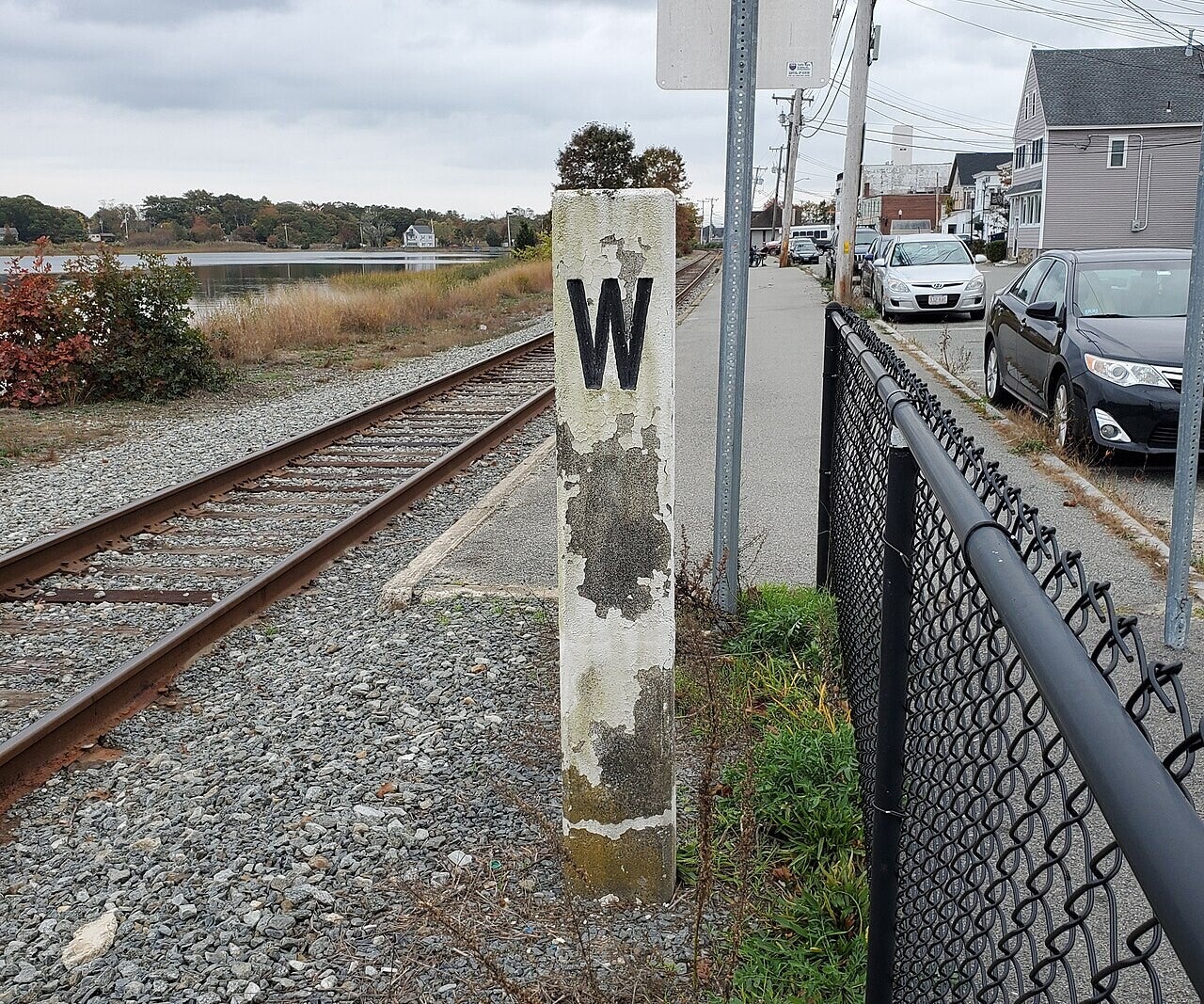
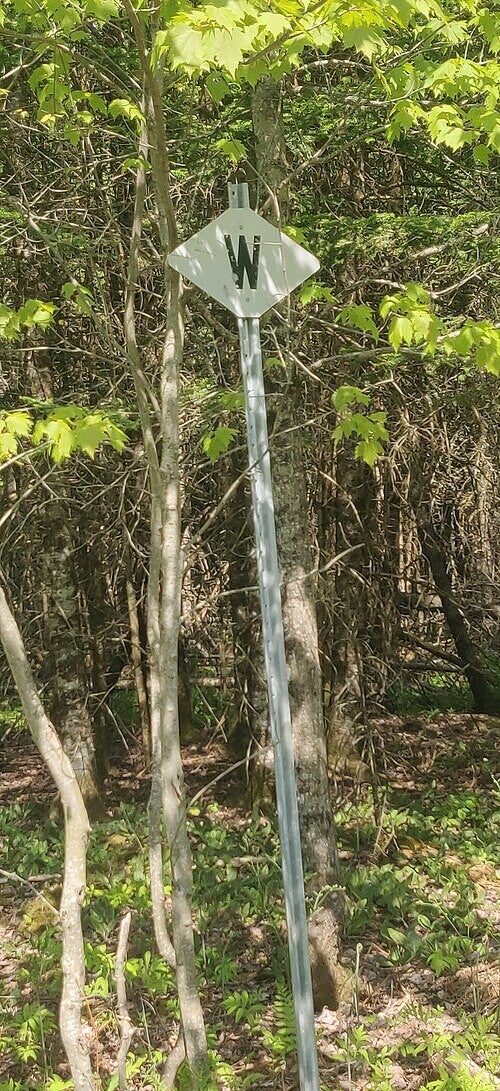
In rail transport, a whistle post or whistle board, is a sign marking a location where an engineer is required to sound the horn or whistle.

Whistle post with multiple crossings in Valdosta, Georgia.
(Michael Rivera, CC BY-SA 4.0 <https://creativecommons.org/licenses/by-sa/4.0>, via Wikimedia Commons)
Whistle posts in the United States and Canada are traditionally placed 1⁄4 mile (400 m) in advance of a road crossing.
The signs in themselves varied in design from railroad to railroad. Some were marked with – – o – (two longs, one short, and another long). This sequence is known as Rule 14(l) " Rule # 14 – Approaching public crossings at grade, to be prolonged or repeated until crossing is reached unless otherwise provided". This rule is applied in almost all U.S. railroad operating rule books. This signal is to be prolonged or repeated until the engine or train occupies the crossing; or, where multiple crossing are involved, until the last crossing is occupied.
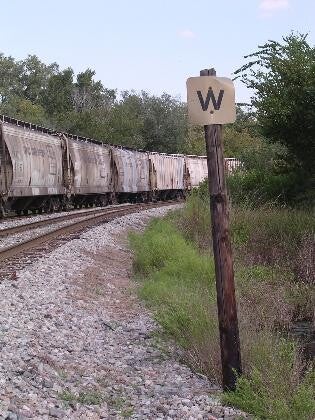
An old whistle post somewhere in the United States.
(Attribution: Harvey Henkelmann, via Wikimedia Commons)
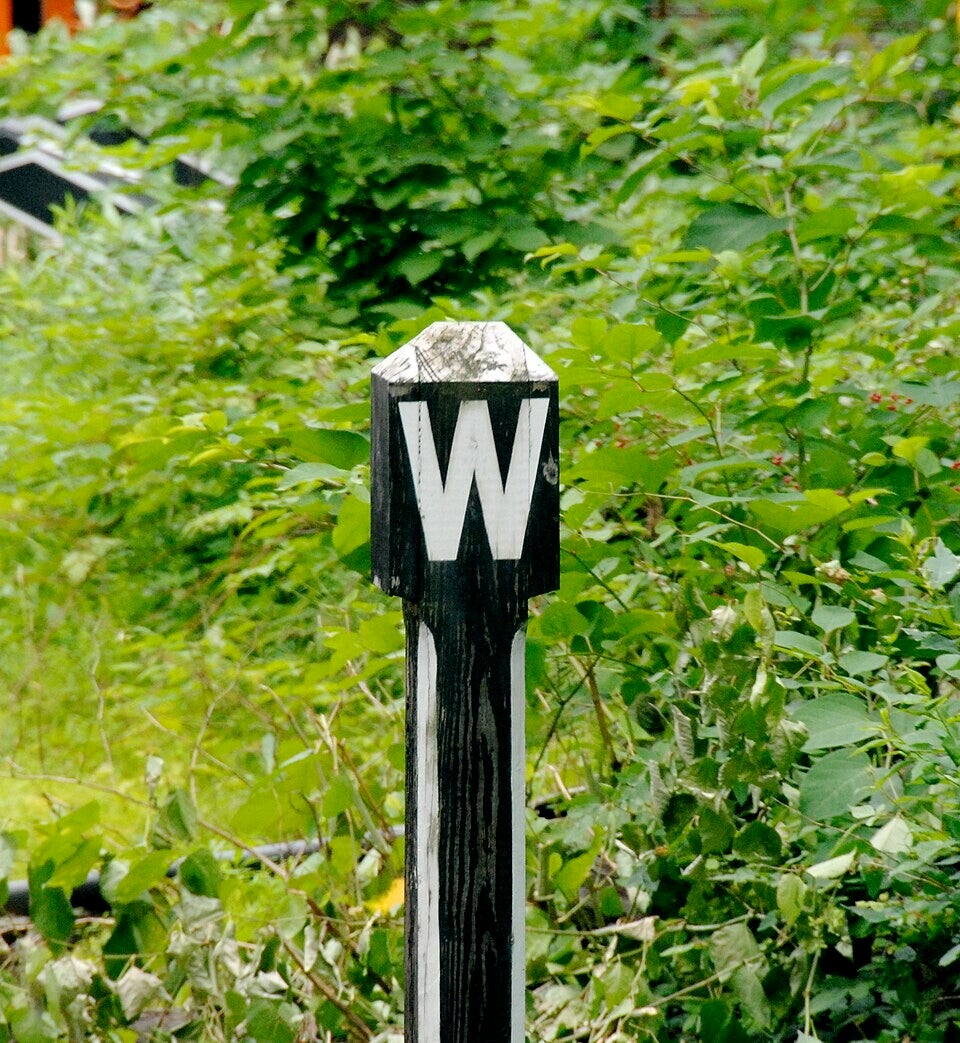
Whistle post on the Catskill Mountain Railroad in July of 2007. (RoySmith, CC BY 3.0 <https://creativecommons.org/licenses/by/3.0>, via Wikimedia Commons)
Whistle post near the former Wareham, Massachusetts station in October 2020. (Pi.1415926535, CC BY-SA 4.0 <https://creativecommons.org/licenses/by-sa/4.0>, via Wikimedia Commons)
Whistle board on the abandoned QCR Chaudière subdivision in Canada. (Wolfy13399, CC BY-SA 4.0 <https://creativecommons.org/licenses/by-sa/4.0>, via Wikimedia Commons)
