
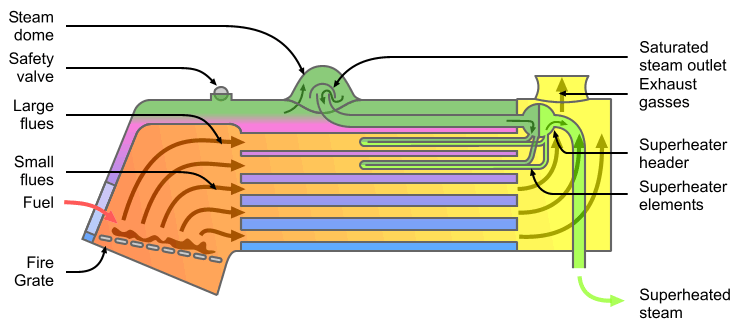
Locomotive fire tube boiler schematic (with superheater).
(Emoscopes, CC BY 2.5 <https://creativecommons.org/licenses/by/2.5>, via Wikimedia Commons)
SUPERHEATER
A superheater is a set of tubes and pipes inside a steam locomotive's boiler that reheats the steam after it leaves the boiler, but before it reaches the cylinders.
When a locomotive makes steam the normal way, that steam is "saturated" — it's full of tiny water droplets and it's at the same temperature as the boiling water in the boiler, around 365-400°F at typical boiler pressure. If you send that wet steam straight to the cylinders, a lot of it condenses back into water as it cools in the pipes and cylinders. That wastes energy and can even cause water hammer and damage.
The superheater fixes that by routing the steam through long, U-shaped tubes that run back through the hot firetubes and flues of the boiler. The hot combustion gases superheat it to 600-750°F, turning it into dry, superheated steam. Dry steam doesn't condense nearly as easily, expands much more powerfully in the cylinders, and gives you about 25-30% more power from the same amount of coal and water.
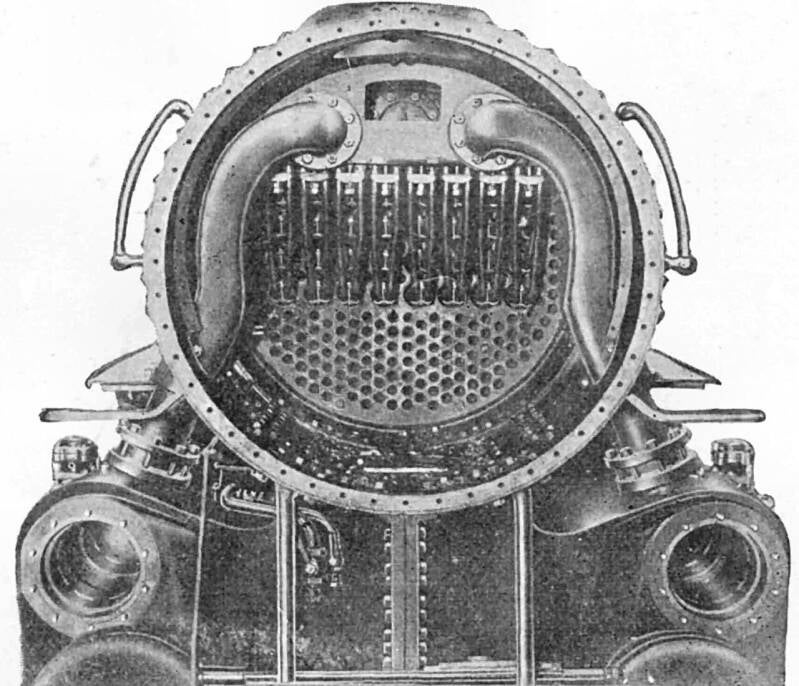
On most American locomotives you can spot a superheater-equipped engine by its larger smokebox and the header in the front of the smokebox. It became standard after about 1910 — nearly all modern steam locomotives built in the U.S. after World War I had them, which is why a 1920s Super Power locomotive could pull so much more than an older saturated-steam engine of the same size.
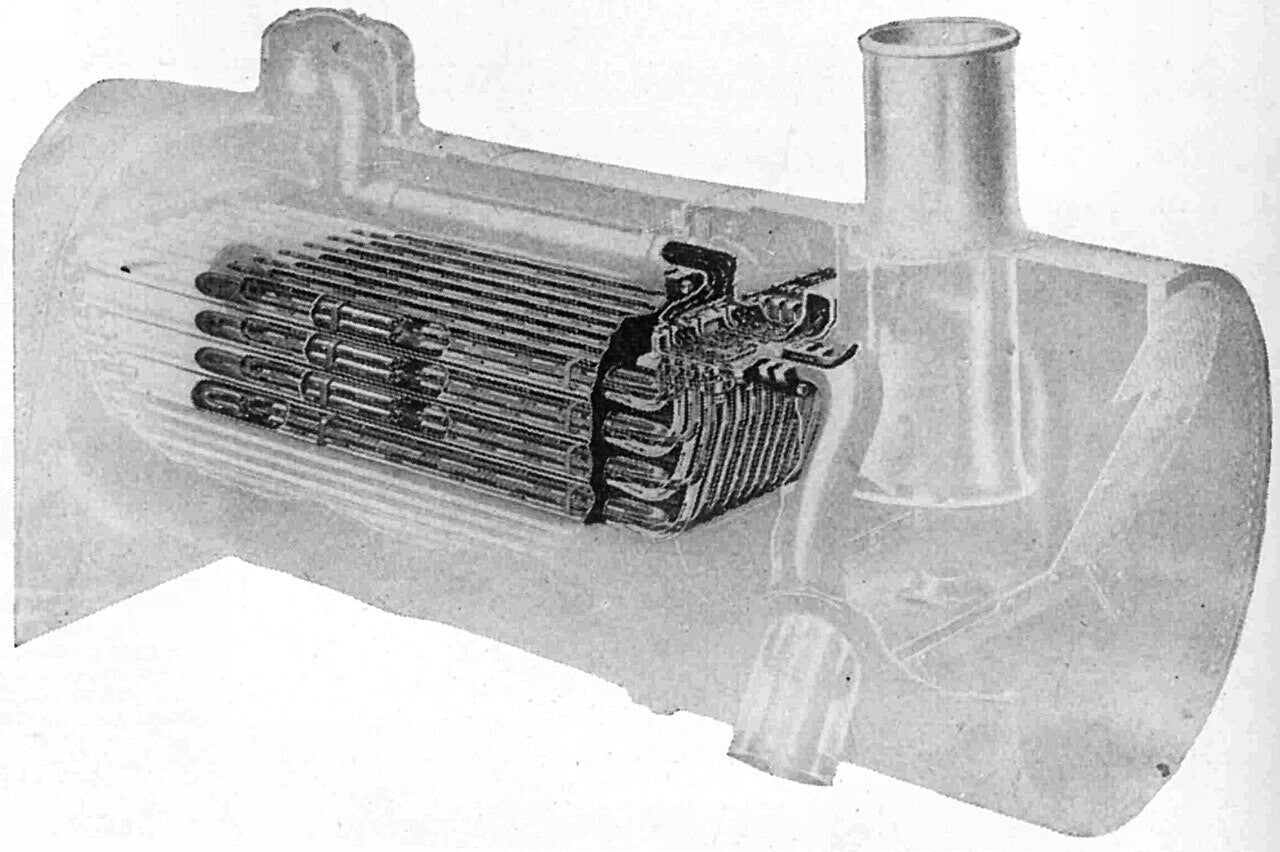
Superheater.
(1922 Locomotive Cyclopedia of American Practice, public domain)
Superheater-front.
(1922 Locomotive Cyclopedia of American Practice, public domain)
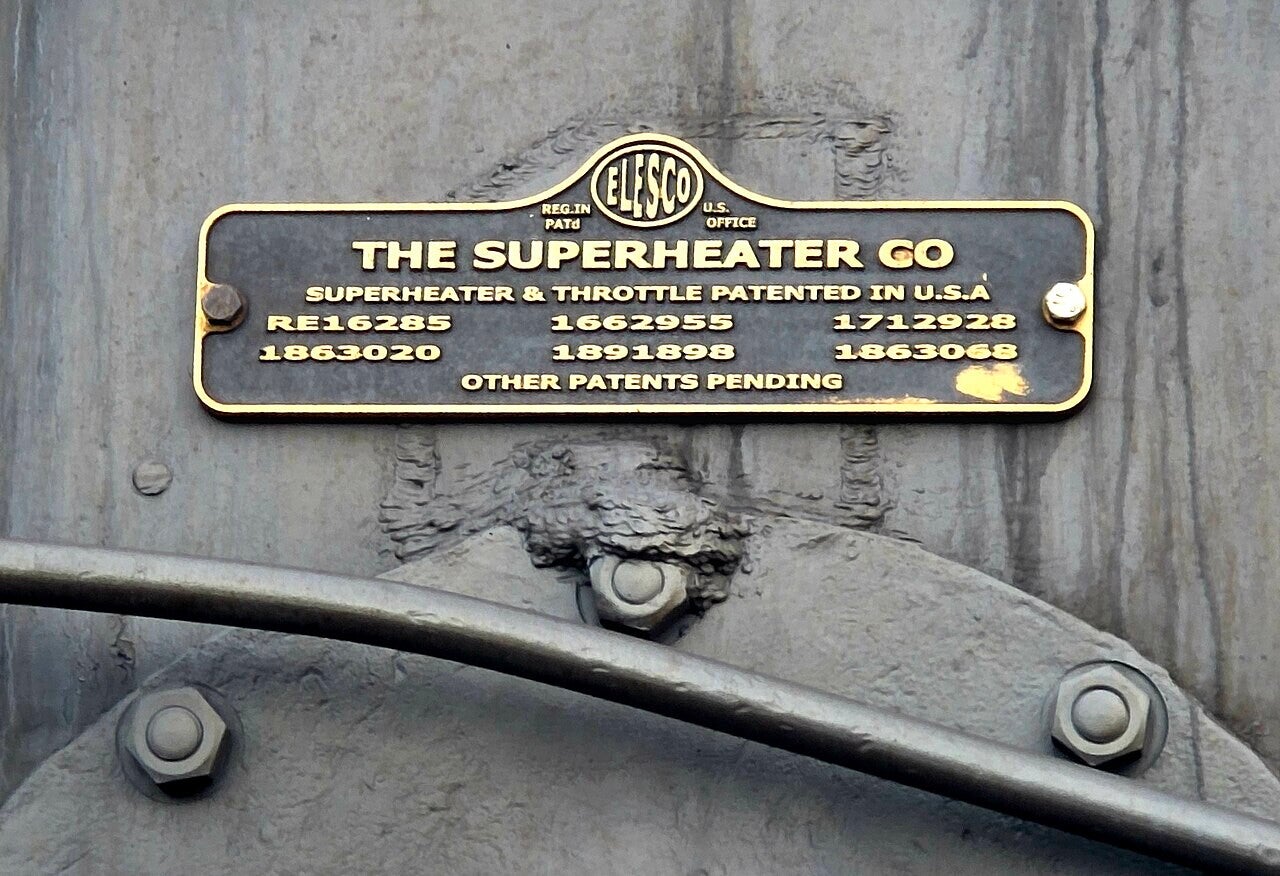
An Elesco Superheater nameplate.
(Emoscopes, CC BY 2.5 <https://creativecommons.org/licenses/by/2.5>, via Wikimedia Commons)