
under construction
PACEMAKER
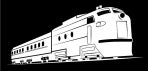
The New York Central Railroad’s Pacemaker freight trains were born out of the railroad’s pre-war effort to win back less-than-carload, or LCL, merchandise traffic from trucks. A predecessor service ran in 1935-36 on essentially the same overnight schedule, but it was discontinued during World War II. When the war ended, the Central resurrected it in July 1946 under the new Pacemaker name, with trains NB-1 and BN-2 running between New York City and Buffalo as the line-haul core of a premium, door-to-door merchandise operation.
What made the Pacemakers visually and operationally distinct was their equipment. They were intended to run as solid consists, up to 70 cars, of 1,000 specially equipped boxcars painted in a striking vermilion red-and-gray scheme with a red-and-white diamond herald. Those cars carried AB-1-B brake equipment that allowed faster emergency brake applications at high speed, a necessity for a fast, time-sensitive schedule. The railroad even painted five cabooses to match. Originally steam-powered west of Harmon, New York, with electric and tri-power locomotives handling the electrified terminal district into Manhattan, the trains were dieselized outside electrified territory by May 1948.
The service quickly expanded beyond the initial New York-Buffalo run. In April 1949 the Central added BB-1 and BB-2 between Boston and Buffalo over the Boston & Albany, serving Boston, Worcester, Springfield, Pittsfield, Albany, Utica, Rochester, and Buffalo, with connections to the New York trains at Albany, Utica, and Buffalo. Westbound NB-1 was extended to Collinwood in Cleveland in August 1949, and by 1951 the Pacemaker name was being applied well beyond those terminals. Cars moved onward in ordinary symbol freights and local transfers to reach points as far as Detroit, Chicago, Cincinnati, Indianapolis, Toledo, and Montreal, making it a system-wide merchandise brand rather than just two trains.
The Pacemakers were successful for a time, but they were a product of a specific moment in freight history. At the end of 1954 the Central introduced its system-wide Early Bird merchandise service, which diluted the Pacemakers’ premier status, and in 1957 the introduction of Flexi-Vans — the Central’s pioneering intermodal container service aimed at the same LCL traffic — effectively ended them. The distinctive red-and-gray cars were repainted freight car brown and absorbed into the general fleet, ending a brief but iconic chapter when railroads tried to fight trucks with speed, schedule reliability, and showmanship.
See Also: