
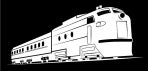


DIXIE MAIL
The Dixie Mail was the workhorse third section of the famous Dixie Route family — the Chicago to Florida trains that ran from 1892 onward via Chicago, St. Louis, Evansville, Nashville, and Atlanta. While the Dixie Flyer carried the premier passengers in its first section and the Dixie Express carried coaches and sleepers in its second, mail and express went by the third section, the Dixie Mail. On the northern leg that meant the Chicago and Eastern Illinois (C&EI), which handled the Chicago (Dearborn Station) to Evansville segment, with connections south on the Louisville & Nashville and beyond to Florida.
On the C&EI itself, the Dixie Mail ran as a night, local-stop train — noted in a 1945 Official Guide as trains 97 and 96 between Chicago and Evansville, leaving Chicago at 7:40 PM and arriving back at 7:35 AM, making a lot of stops in contrast to the daytime limiteds. That schedule fit its job: it was a Railway Post Office train as much as a passenger train, carrying sorted mail in full RPO cars and express in baggage combines. The C&EI rebuilt seven full RPOs in the late 1940s and another in the early 1950s, and the last C&EI RPO in operation was the Chicago & Evansville line, a route dating back to 1882 as the Chicago & Terre Haute and Terre Haute & Evansville.
Like the rest of the Dixie Route, the Dixie Mail faded as passenger traffic collapsed in the 1950s and 1960s. Sources note that trains No. 3 and No. 4 — which had been the Dixie Mail before losing its name — continued as combined mail-and-passenger runs, but by the end of the 1950s the combined trains looked like mail trains with more express than passengers. The parent C&EI passenger service was stripped back until, after the Georgian was discontinued as a named train, its sole remaining train was the short Chicago-Danville Danville-Chicago Flyer. The Dixie Flyer itself was discontinued in 1966, a victim of plummeting ridership in the face of airline and highway competition, and the mail section went with it — the end of a system where mail, express, and passengers moved together overnight between Chicago and the South.